
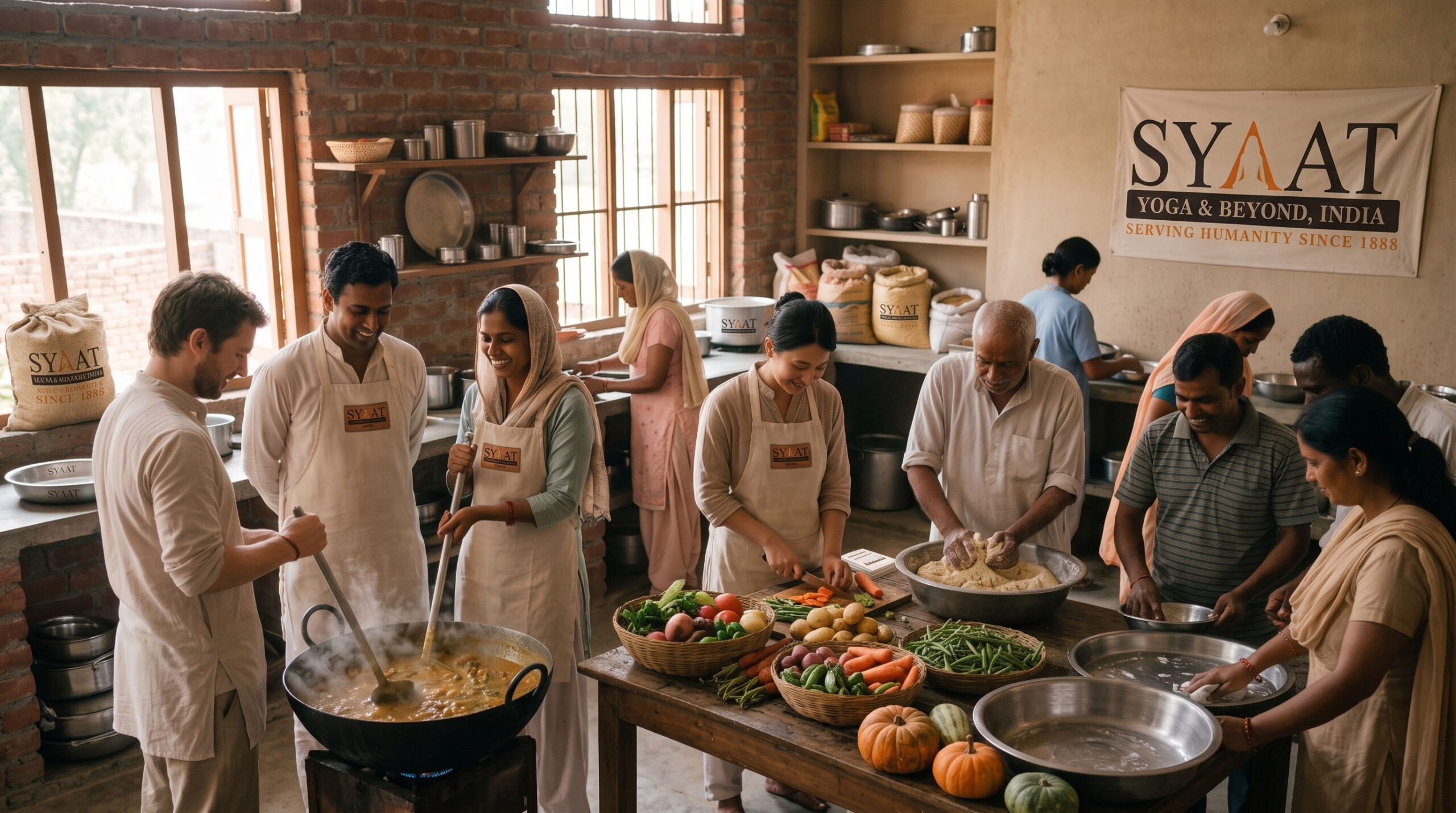
Rooted in the Sanskrit root sev (to serve, attend to, or honor), Seva transcends charity or volunteering. While ordinary philanthropic acts often originate from duty, pity, or social obligation, Seva is an inward spiritual discipline (sadhana) manifested as outward compassion. It is the practice of performing action without desire for personal recognition, reward, or transactional reciprocity.
In Indian philosophical thought, Seva bridges individual consciousness with universal welfare (Lokasangraha). It dissolves the boundaries of the ego (ahamkara), converting everyday human action into living worship.
Core Pillars: Tan, Man, and Dhan
Traditional spiritual scriptures articulate that genuine Seva engages the entirety of one\’s faculties, harmonized across three dimensions:
- Tan (Physical Action): The engagement of the body in manual labor and direct service—preparing nourishment, tending to the ailing, cleaning communal spaces, and giving physical relief to living beings. It instills profound humility by placing the physical form at the disposal of others.
- Man (Mental and Spiritual Intent): The cultivation of pure goodwill, counseling, teaching, compassionate listening, and sending heartfelt prayers. For an action to qualify as true Seva, the mind must remain free of arrogance, judgment, or condescension.Sikh Missionary Society
- Dhan (Material Resources): The conscious sharing of one’s wealth, provisions, and resources with those in distress without creating a sense of indebtedness in the recipient.
Philosophical Foundations
- Nara Seva, Narayana Seva: The Advaitic and Bhakti traditions uphold that every living being houses the divine consciousness (Ishvara sarva-bhutanam). Serving humanity and all sentient creatures is directly serving the Divine.Swami Vivekananda emphasized this as Daridra Narayana Seva—approaching the downtrodden not with condescension, but with reverence.
- Nishkama Karma: Central to the Bhagavad Gita, action performed without attachment to results purifies the subtle body (chitta shuddhi). Seva frees the practitioner from the bindings of transactional karma, turning work into an offering.-
- Egalitarian Service in Sikhism: In the Sikh tradition, Seva is central to spiritual realization. From the collective preparation and serving of Langar (the egalitarian community kitchen) to cleaning the shoes of visitors at the Gurdwara, Seva directly counters Haumai (egotistical pride), establishing radical social equality regardless of caste, creed, or standing.
Transformative Power in Modern Life
In a modern culture dominated by hyper-individualism and constant measurement of personal return on investment, practicing Seva is deeply restorative:
- Eradicating Egocentric Stress: Chronic anxiety often thrives on excessive self-focus. Shifting one\’s attention toward the well-being of others broadens mental perspective and naturally reduces internal psychological friction.Harmony Yog
- Purification of Intent: Regular engagement in unadvertised service grounds leadership, practice, and personal conduct in empathy rather than self-aggrandizement.Sikh Missionary Society
- Ecological and Social Harmony: Seva extends beyond human borders to the protection of nature, animals, and the natural environment—honoring the interconnected web of all life.
True Seva requires neither grand platforms nor immense wealth. It thrives in quiet acts: extending patience, lifting a burden, offering a meal, or planting a tree without claiming authorship. When service is done with pure humility, the distinction between the server and the served disappears, leaving only unity.







Leave a Reply