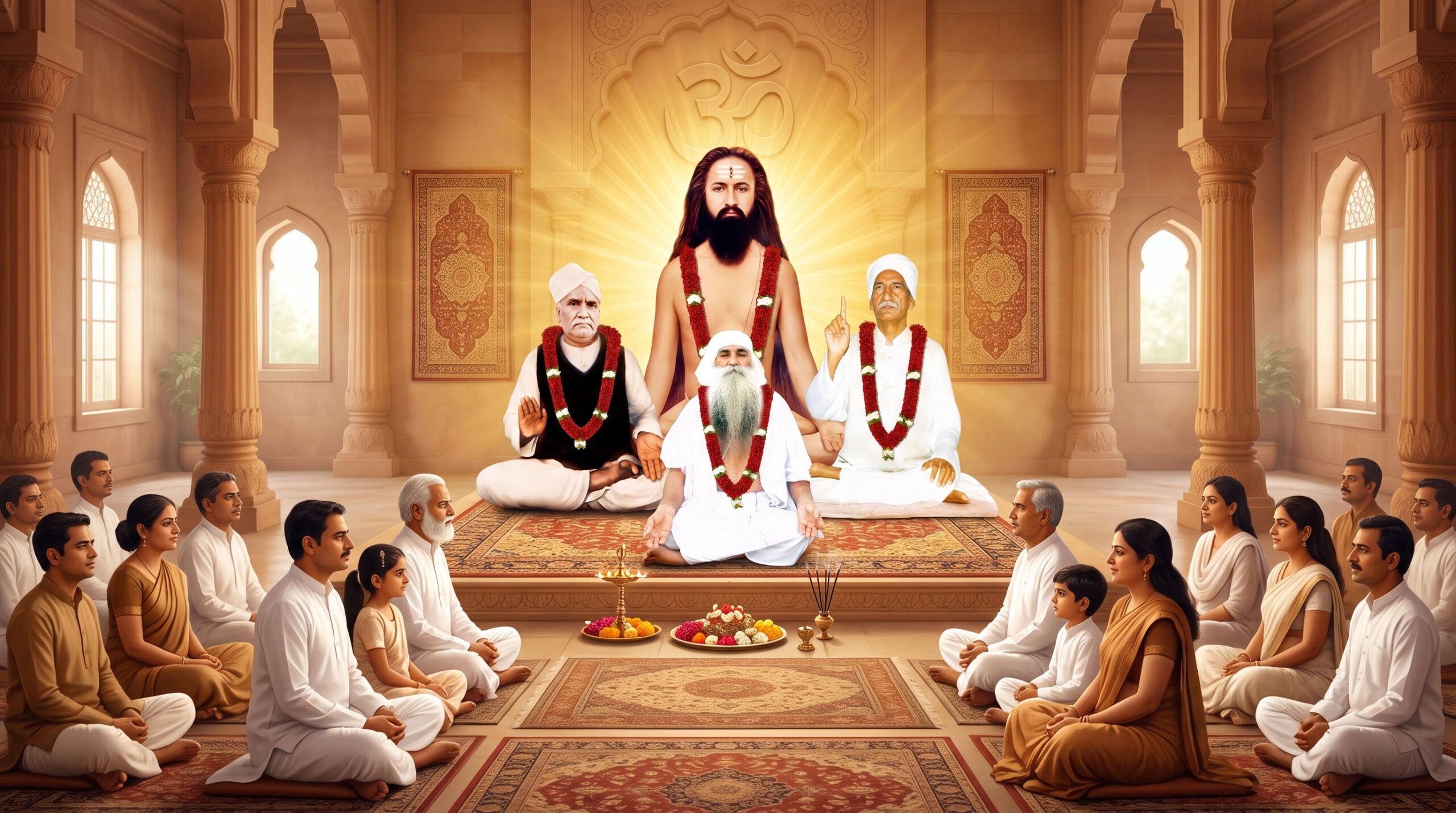
The Essential Role of the Guru in Yogic Science
In an era where yoga is frequently reduced to physical calisthenics, designer apparel, and commercial wellness trends, the deeper essence of this ancient Vedic science often gets overshadowed. Yoga in its truest sense is not merely an external regimen for muscular flexibility; it is a profound internal discipline designed to awaken consciousness, quiet the mind, and unite the individual soul with the divine.
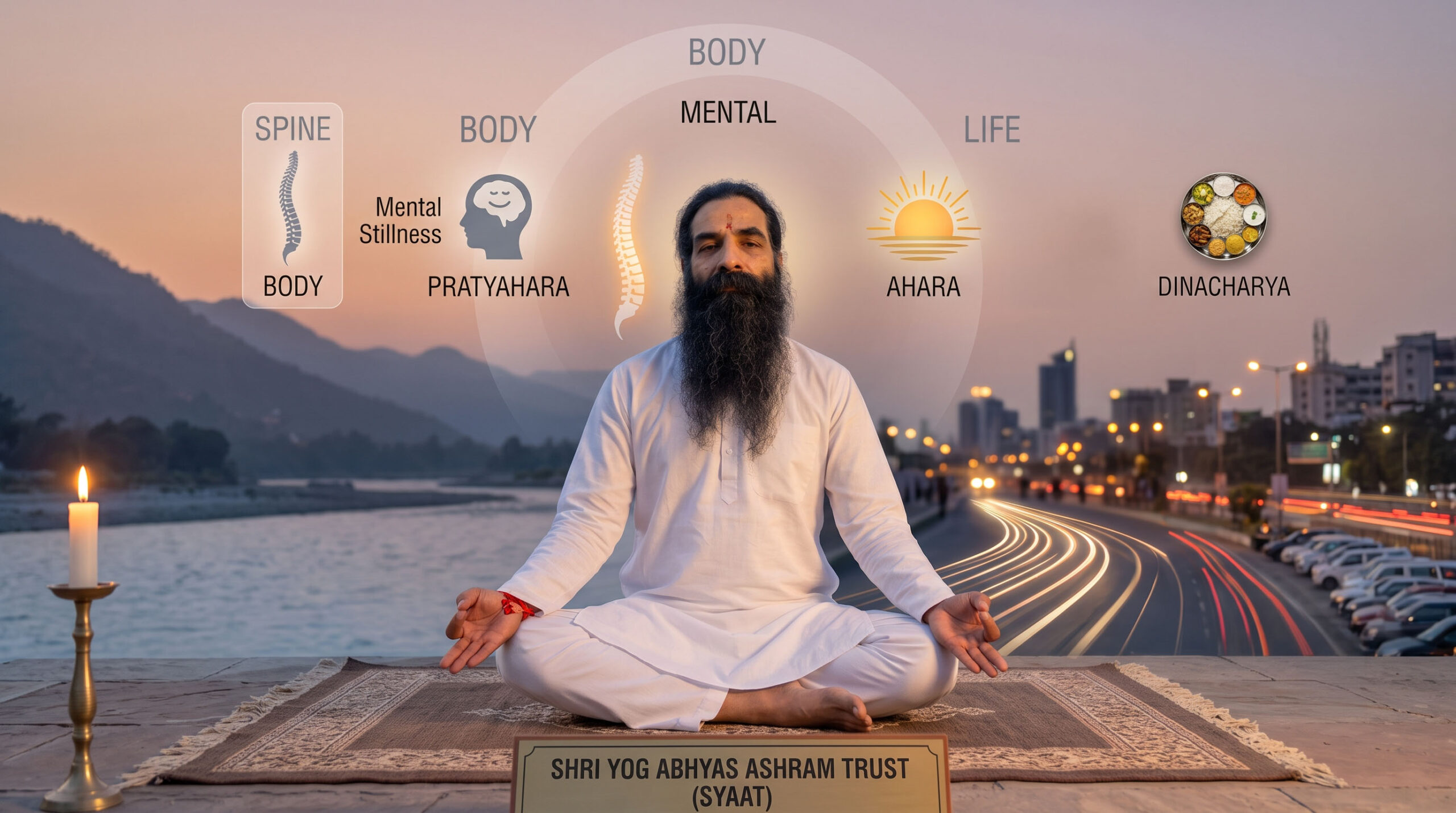
In the teachings of Swami Amit Dev, Pradhan Yogacharya of Shri Yog Abhyas Ashram Trust (SYAAT), this transformative journey cannot bear ultimate fruit without an indispensable foundation: the Guru and the sacred continuum of Guru Parampara.
The Living Current of Guru Parampara
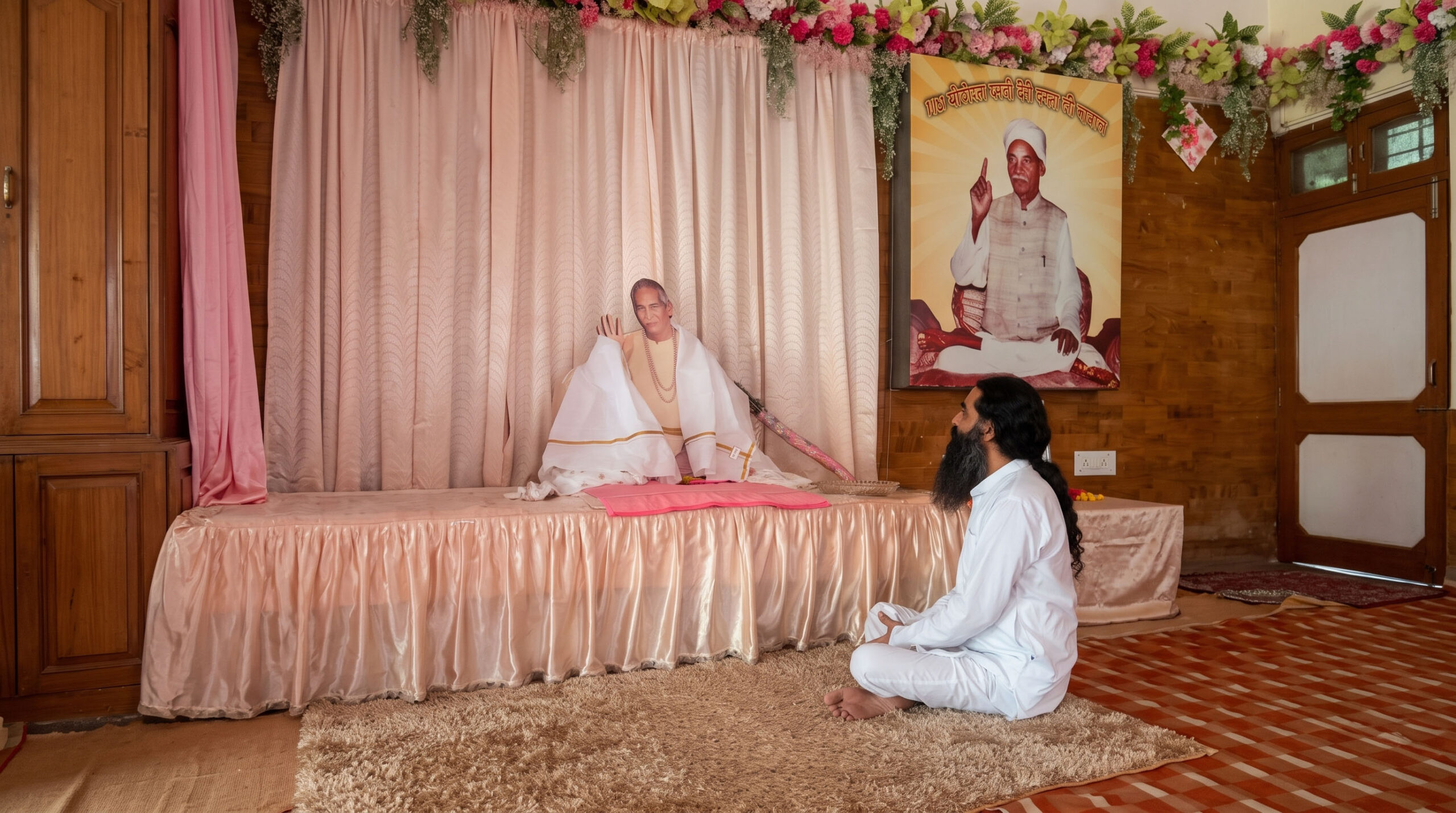
A central tenet of the ashram’s tradition—rooted in the divine lineage originating from Yogeshwar Ramlal Bhagwan and carried through Yogeshwar Mulakhraj Ji Maharaj, Yogeshwar Devi Dayal Ji Maharaj, and Yogeshwar Surender Dev Ji Maharaj—is that spiritual knowledge cannot be acquired solely through intellectual study or mechanical repetition.
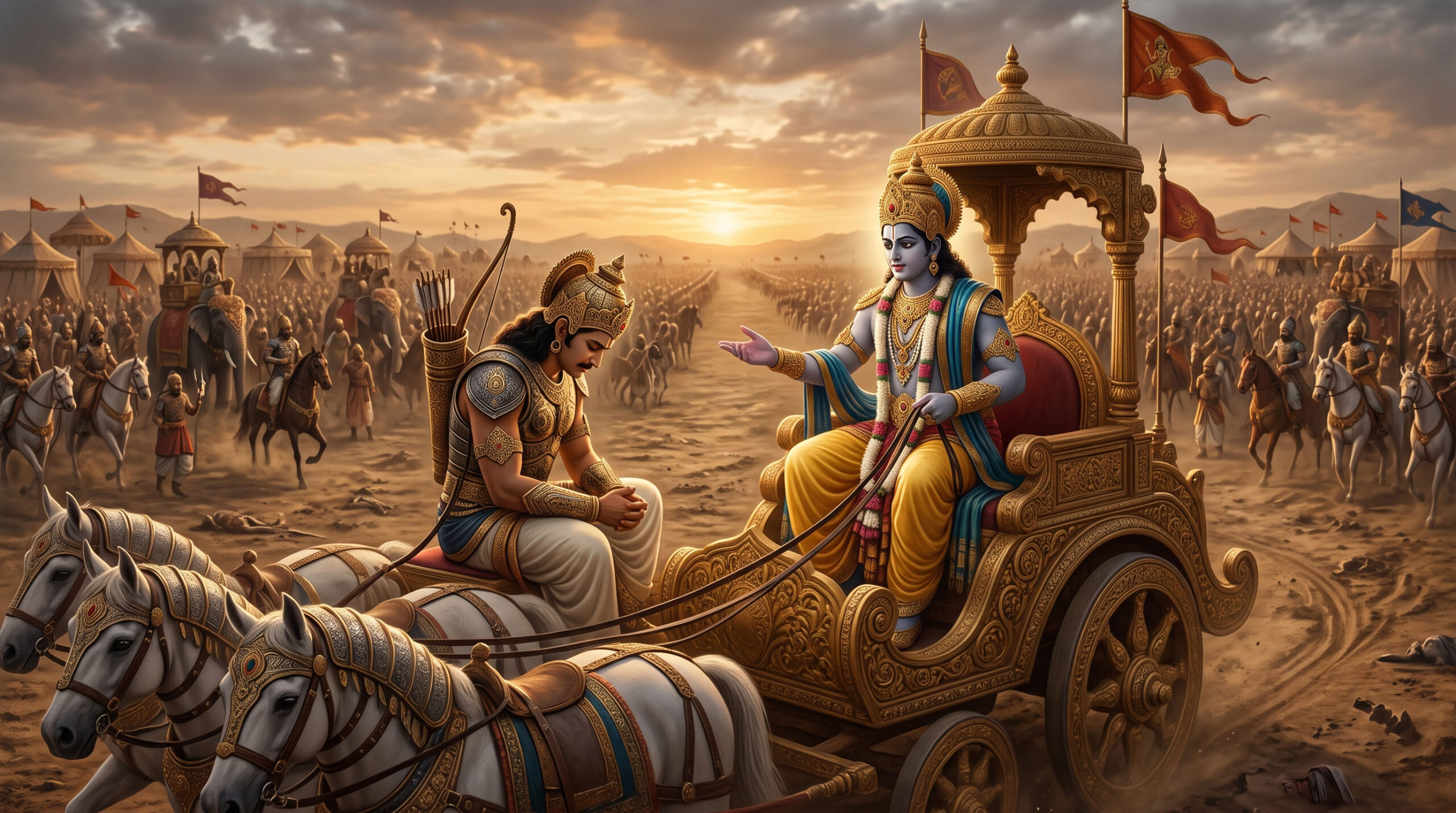
Textbooks and scriptures preserve the map, but the Guru is the living navigator. In the Vedic tradition, spiritual wisdom is transmitted Prana-to-Prana, a living current of energy passed from master to disciple. Through Guru Kripa (the master’s grace), a seeker is connected directly to the reservoir of spiritual energy accumulated across generations of realized masters. Without this unbroken transmission, yogic techniques risk becoming inert, mechanical exercises devoid of inner life.
Moving Beyond Posture: Awakening Inner Consciousness
Modern seekers often approach yoga seeking relief from contemporary ailments—chronic stress, mental fragmentation, and emotional turbulence. While physical asanas provide immediate physiological benefits, Swami Amit Dev emphasizes that genuine healing occurs only when the inner awareness is stirred.
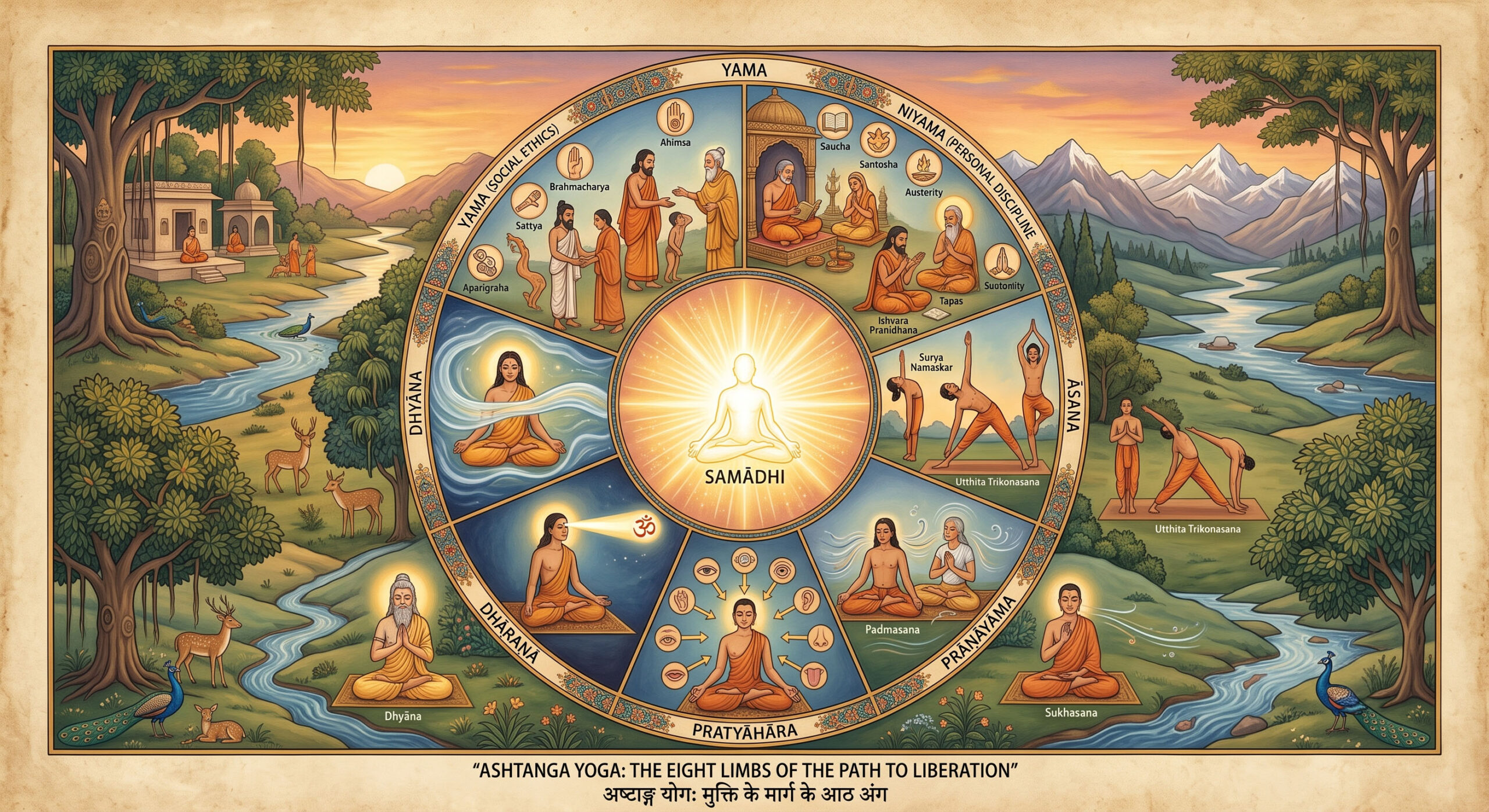
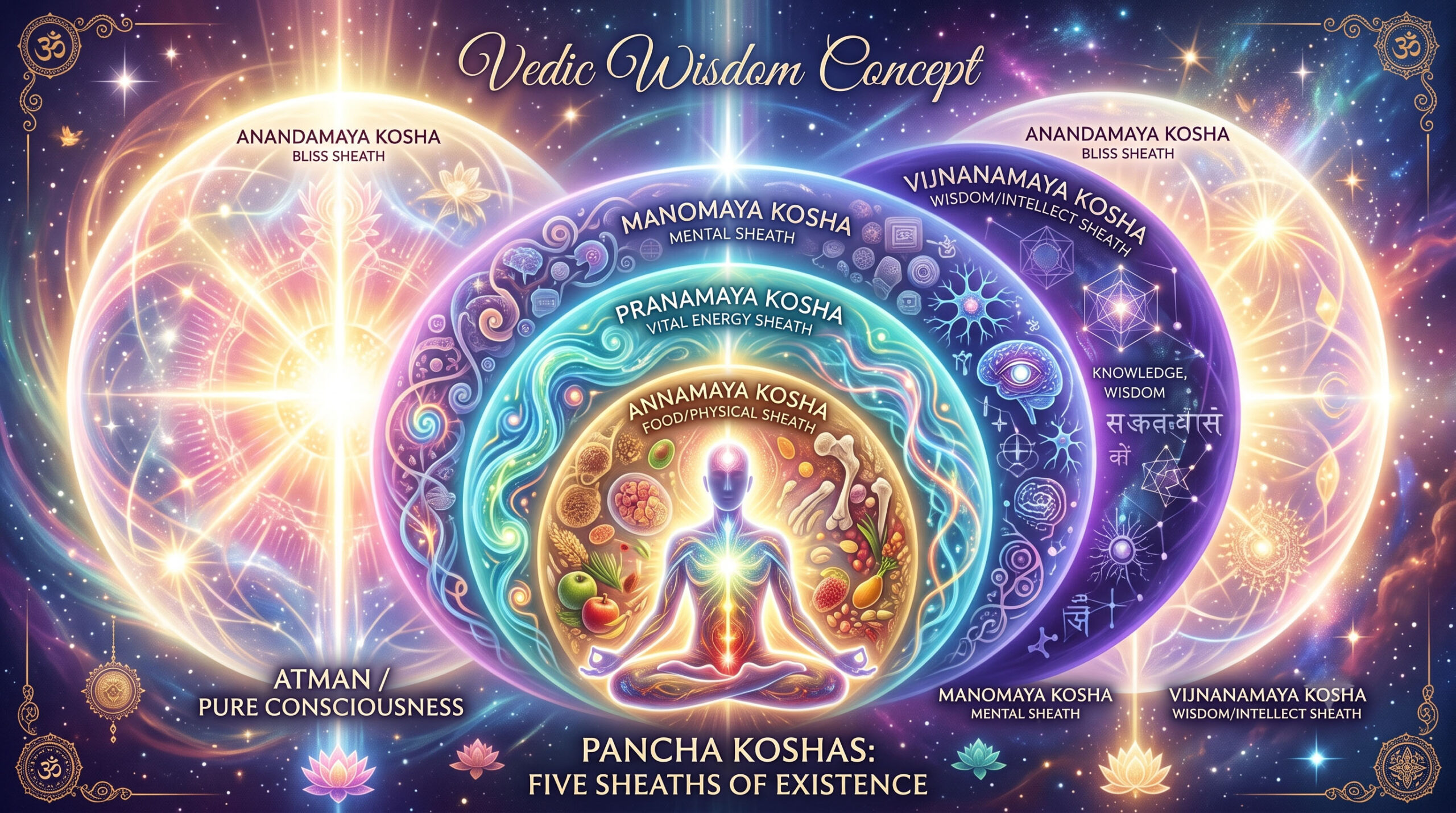
Anyone can replicate a posture by watching a screen, but a video cannot observe the disciple’s subtle blockages or the restlessness of their mind. The Guru acts as an external mirror and an inner anchor, guiding the practitioner beyond the physical frame (Annamaya Kosha) into the deeper realms of breath, mind, and spirit (Pranamaya and Manomaya Koshas). Under the master’s gaze, the practice matures from physical gymnastics into Chitta Shuddhi—the systematic purification of consciousness.
Discernment and Safe Navigation of the Subtle Sciences
The higher dimensions of yoga—such as advanced pranayamas, Shatkarmas (internal cleansing kriyas), and the awakening of the dormant Kundalini energy—deal with the subtle vital forces (Prana) that govern life itself.
Practiced haphazardly or without qualified guidance, these powerful techniques can create imbalances in the nervous system and mental equilibrium. The Guru serves as a vital safeguard:
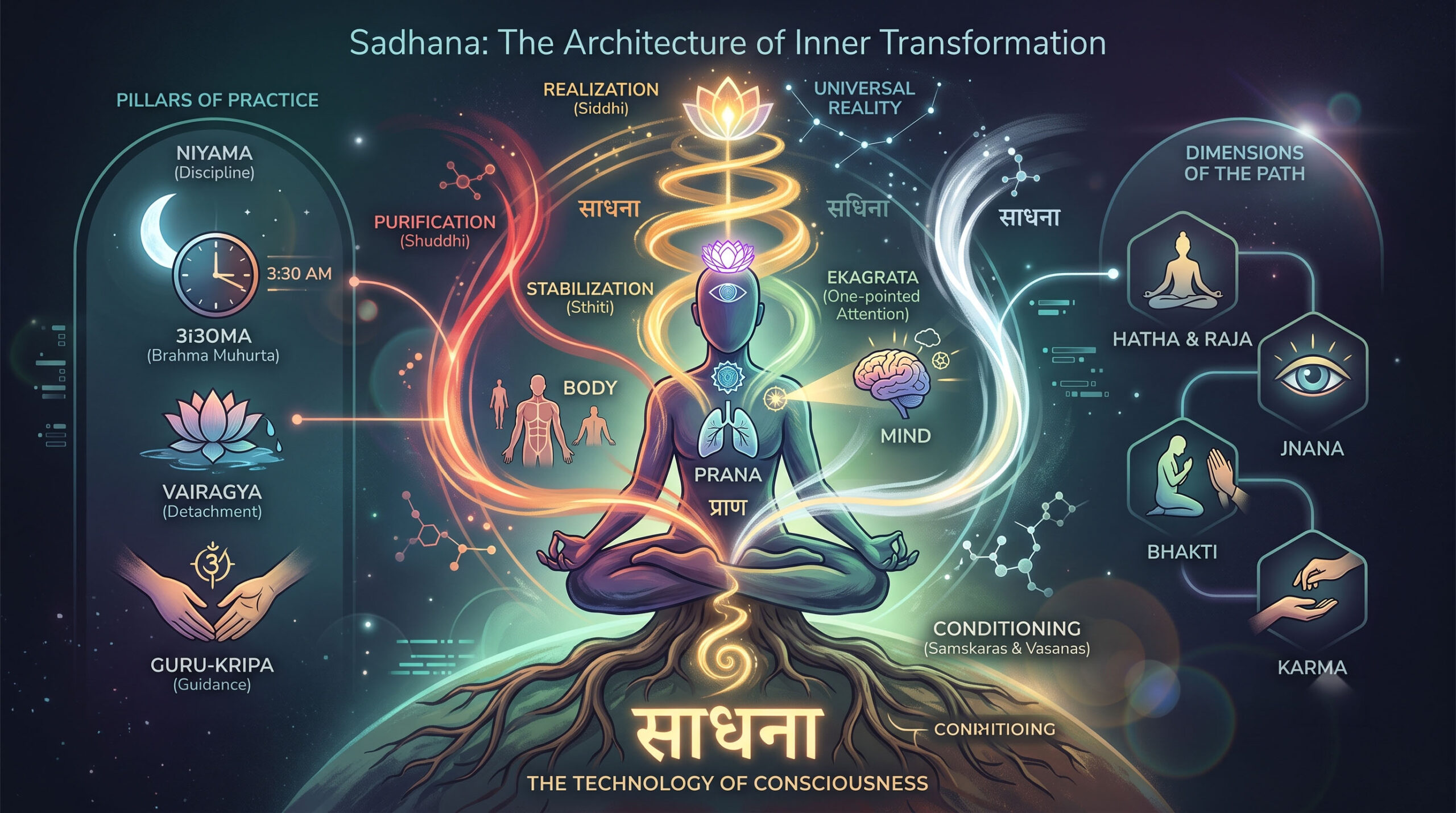
- Assessing Individual Capacity: Evaluating the disciple’s unique physical temperament (Prakriti), mental tendencies, and spiritual readiness.
- Prescribing Balanced Sadhana: Tailoring practices so that energy rises harmoniously without causing shock to the subtle channels (Nadis).
- Correcting Deviations: Detecting subtle pitfalls of ego, spiritual pride, or incorrect methodology before they entrench themselves.
The Alchemical Shift: From Discipline to Devotion
Perhaps the most profound role of the Guru lies in dismantling the practitioner’s ego (Ahamkara). A lone practitioner often falls into the trap of spiritual pride—measuring progress by the duration of a headstand or the mastery of difficult techniques.
The relationship with a Guru introduces the vital element of Samarpan (self-surrender). When practice is offered in humility and devotion at the feet of the master:
- Routine discipline transforms into heartfelt devotion (Bhakti).
- Rigid effort softens into receptivity and grace.
- The illusion of the individual doer begins to dissolve, paving the way for genuine self-realization.
The Manifest Light
The word Guru derives from two roots: Gu, meaning darkness, and Ru, meaning light. In the philosophy articulated by Swami Amit Dev, the Guru is not a distant figure to be worshipped blindly, but a living embodiment of the divine light that already resides within the student.
By attuning oneself to the Guru’s wisdom and lineage, the seeker is systematically guided out of the darkness of mental confusion into the dawn of true self-knowledge, discovering that the ultimate destination of yoga was always within.