
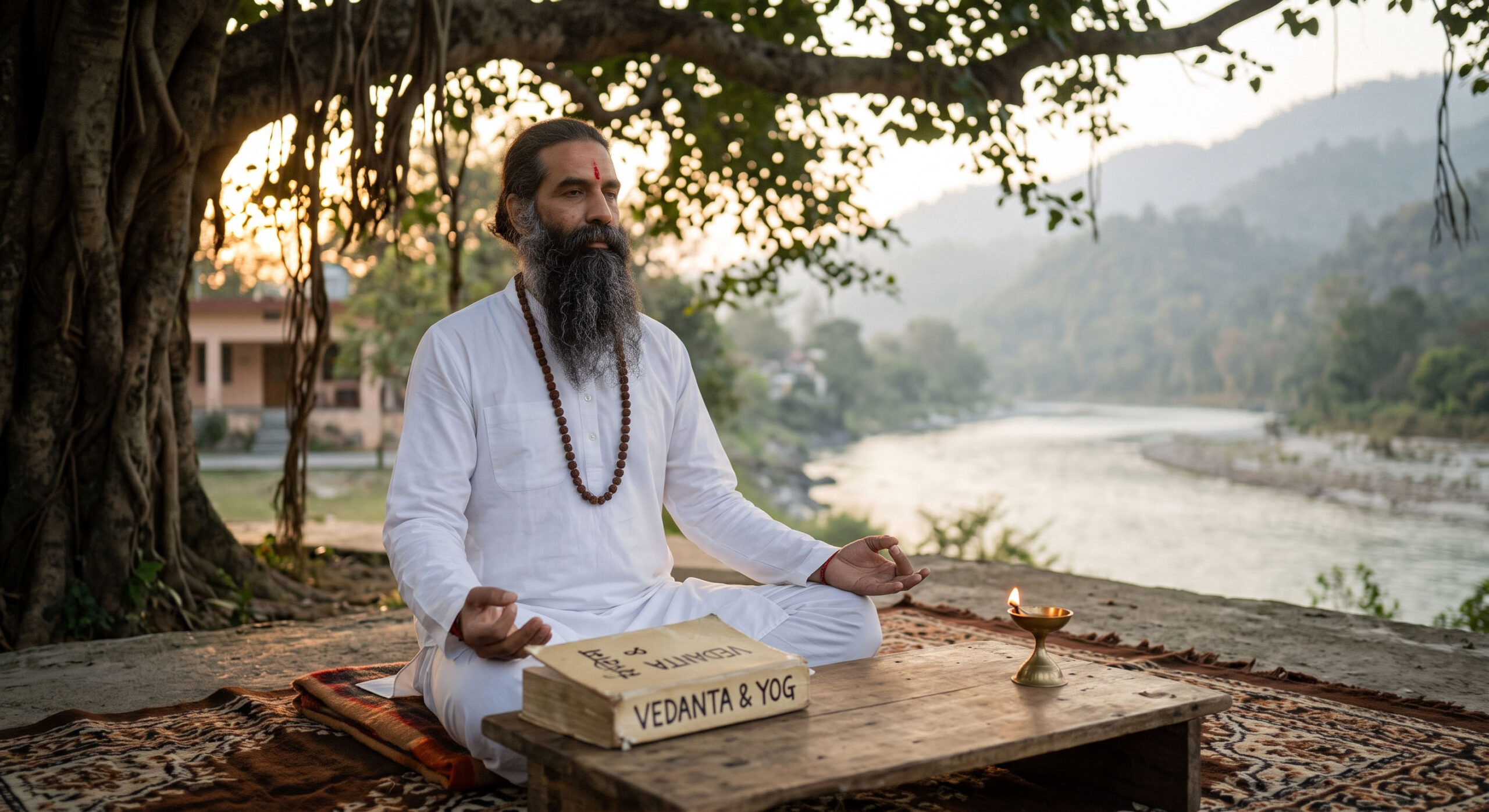
Vedanta and Yog
Reflections through the Teachings of Yog Yogeshwar Mahaprabhu Ramlal Ji Maharaj
In the vast landscape of Indian spiritual thought, Vedanta and Yog are often treated as distinct disciplines—the former viewed as an intellectual inquiry into non-duality and ultimate reality, and the latter as an experiential methodology of inner discipline and mental stillness. In the authentic lineage guided, this artificial boundary dissolves. Vedanta provides the vision of truth (Darshan), while Yog provides the direct, living path (Sadhana) to realize it.
Swami Amit Dev
The Philosophical Synthesis: Theory Meets Realization
Vedanta, emerging from the Upanishads, declares the fundamental oneness of individual consciousness (Jiva) and cosmic consciousness (Brahman): Tat Tvam Asi (\”Thou Art That\”). Yet, profound as it is, pure intellectual contemplation (Jnana) can risk remaining theoretical if the mind remains turbulent, scattered, or bound by habitual mental modifications (vrittis).
YouTube
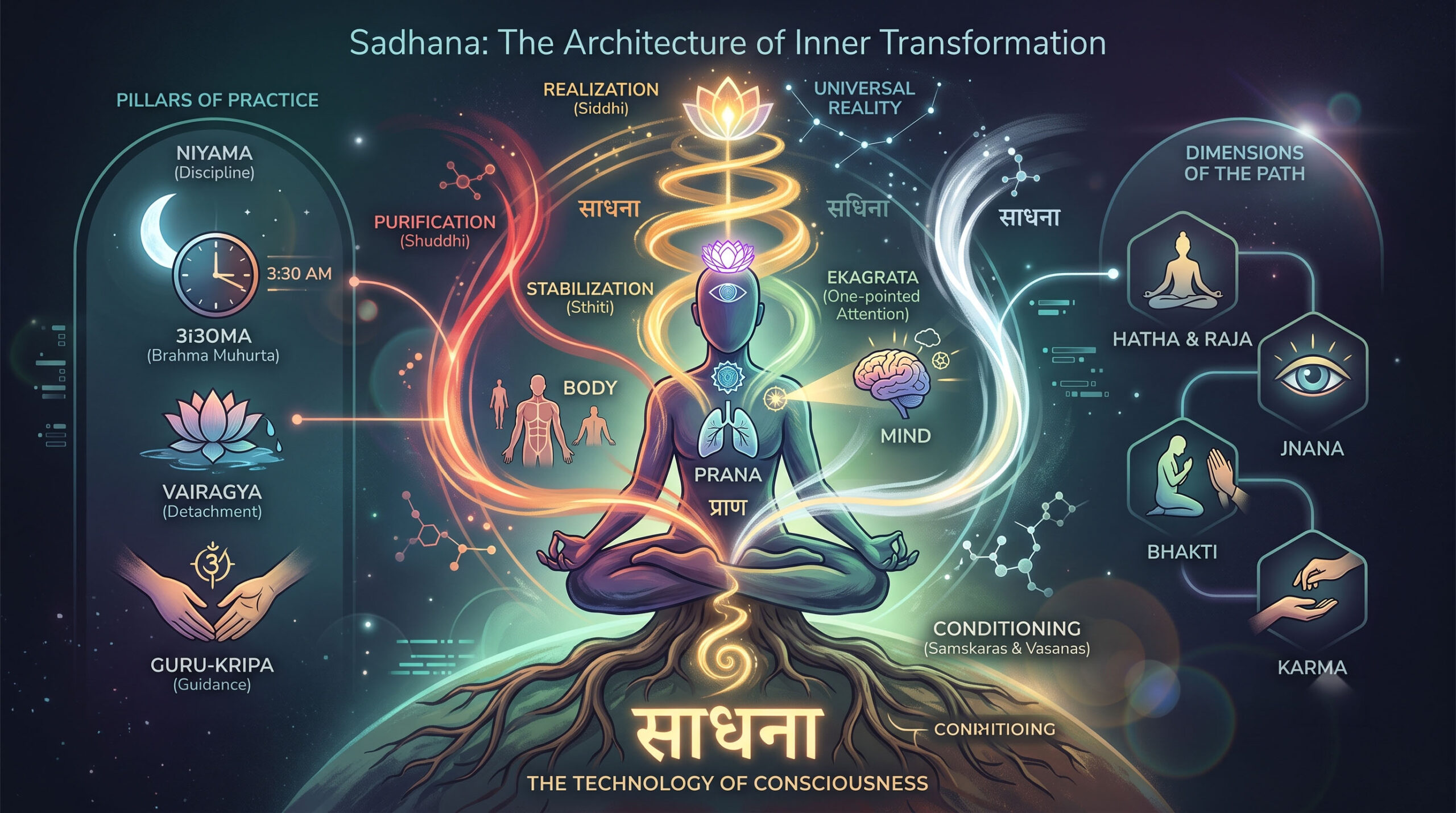
This is precisely where Yog enters. Swami Amit Dev emphasizes that Yog is far more than physical postures or bodily exercises; it is a sacred science of inner consciousness and discipline. If Vedanta is the vision of the summit, Yog is the conscious ascent. Yog systematically calms the nervous system, purifies the prana (vital energy), and stabilizes the intellect, creating the pristine mental stillness necessary for Vedantic wisdom to take root not merely as an idea, but as direct experience.
Swami Amit Dev+ 1
Core Pillars of the Integrated Path
In the vision expounded by Gurudev, navigating modern life requires grounding ancient Vedic wisdom in disciplined daily living:
Swami Amit Dev
- Purification Before Contemplation (Chitta Shuddhi)Before the subtlest truths of Advaita Vedanta can be assimilated, the instrument—the body-mind complex—must be steady. Through traditional Asana, Pranayama, and Kriyas, physical and subtle toxins are eliminated, bringing the nervous system into natural equilibrium.
- The Witness Attitude (Sakshi Bhava)Both Vedanta and the foundational science of Yog converge on cultivating the internal witness. Instead of becoming entangled in fleeting thoughts, emotional currents, and sensory desires, the practitioner learns to observe the contents of the mind from an unattached vantage point. This inner stillness transforms daily living into effortless mindfulness.
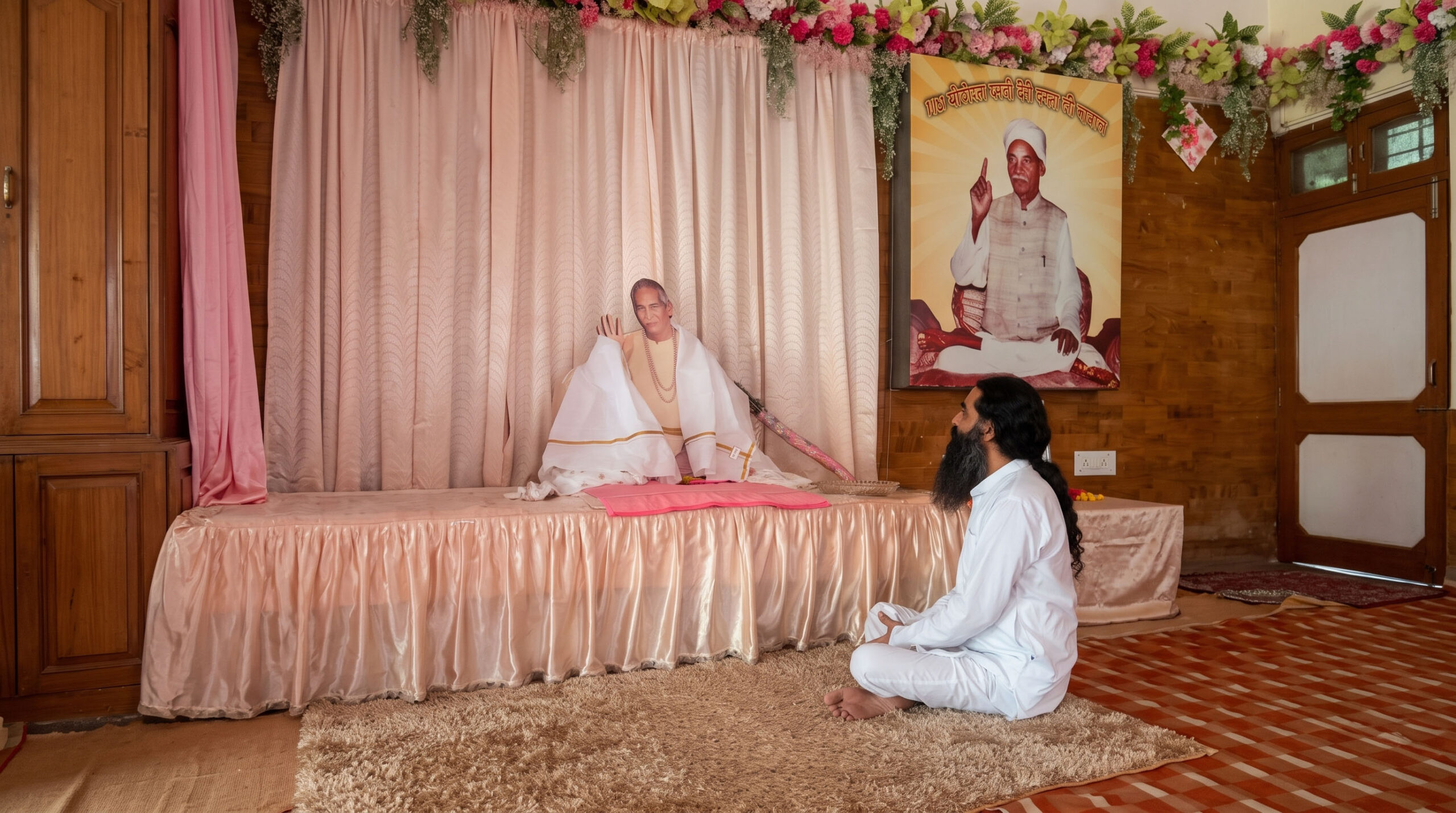
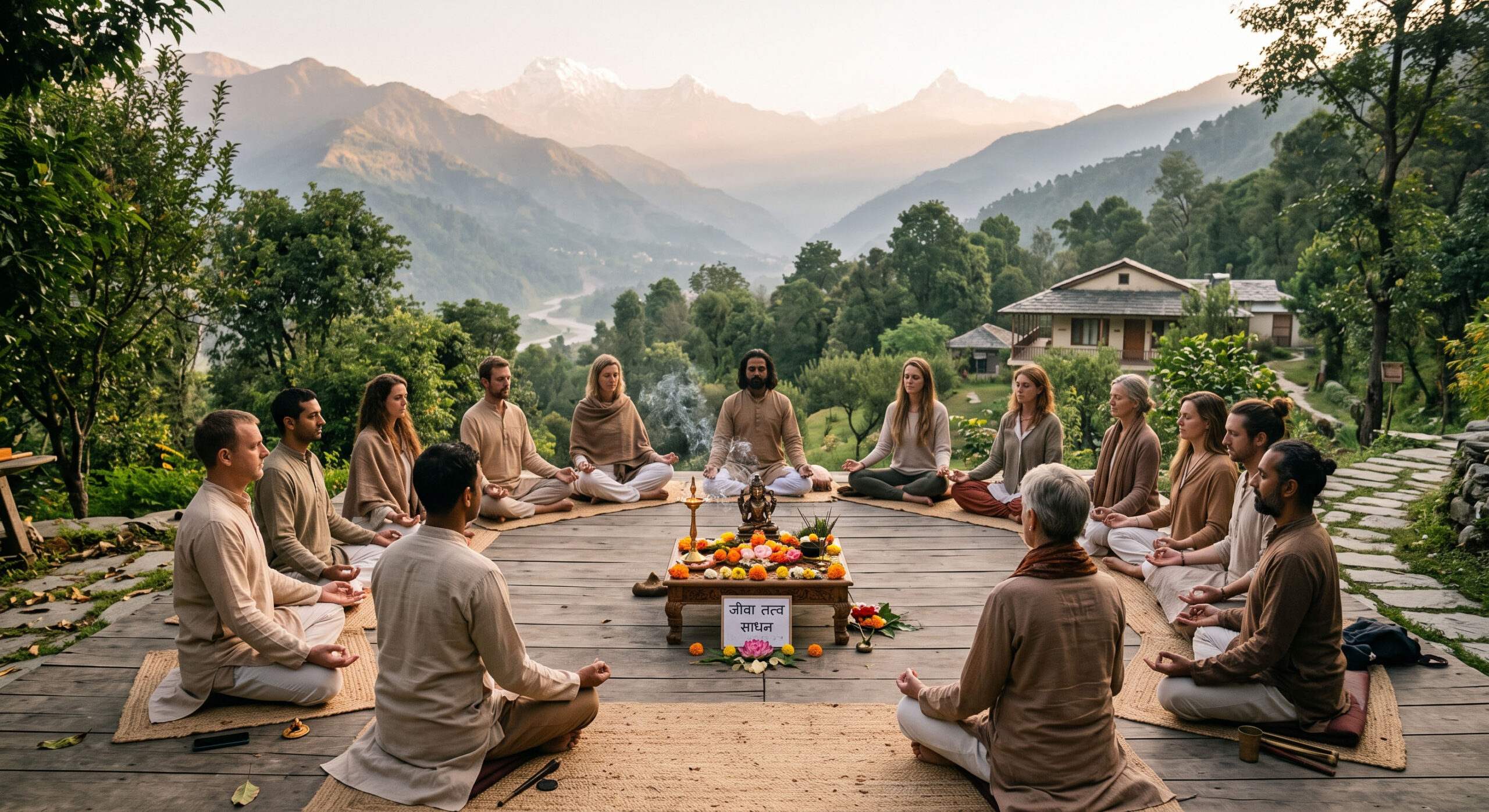
- Discipline as Devotion, Service as WorshipUnder the Guru Parampara of SYAAT, spiritual life does not demand retreating from society. Yogic discipline (Sadhana) becomes an act of inward devotion, while external actions transform into selfless service (Seva). When action is performed without egoic craving, it harmonizes the individual with the cosmic order, mirroring the highest ideals of both Karma Yog and Vedanta.Swami Amit Dev
Living the Wisdom in the Contemporary World
For the modern seeker, fragmented between digital distractions and psychological stress, dividing philosophy from daily life creates dissonance. Gurudev highlights that the true test of spiritual practice is not how long one can sit in silence, but how steady, compassionate, and grounded one remains amid the complexities of modern responsibility.
When Vedanta informs Yog, the practice never degenerates into mere physical vanity. When Yog grounds Vedanta, philosophy never remains trapped in intellectual debate. Together, they form an unbroken bridge from self-discipline to Self-realization—awakening the practitioner to the timeless truth that liberation is not a future destination, but the innate reality of our own essential nature.




Leave a Reply