

In an era characterized by relentless pace, cognitive overload, and external distraction, the ancient wisdom of Maharshi Patanjali’s Yoga Sutras remains a profound, timeless blueprint for human existence. Under the lineage of Yog Yogeshwar Mahaprabhu Ramlal Ji Bhagwan and the teachings advanced by Swami Amit Dev (Pradhan Yogacharya of Shri Yog Abhyas Ashram Trust), Yoga is approached not as modern postural acrobatics, but as a rigorous, authentic science of mind, consciousness, and living balance.
Forbes India
The Yoga Sutras serve not merely as theoretical philosophy, but as an applied methodology for transmuting daily discipline into spiritual awakening.
1. The Core Objective: Chitta Vritti Nirodha
The entire foundational architecture of Patanjali’s treatise rests upon aphorism 1.2:
योगश्चित्तवृत्तिनिरोधः
(Yogaś citta-vṛtti-nirodhaḥ)
Yoga is the intentional stilling of the turbulent modifications and oscillations (vṛttis) of the mind-field (chitta).
Samadhi Yoga Ashram
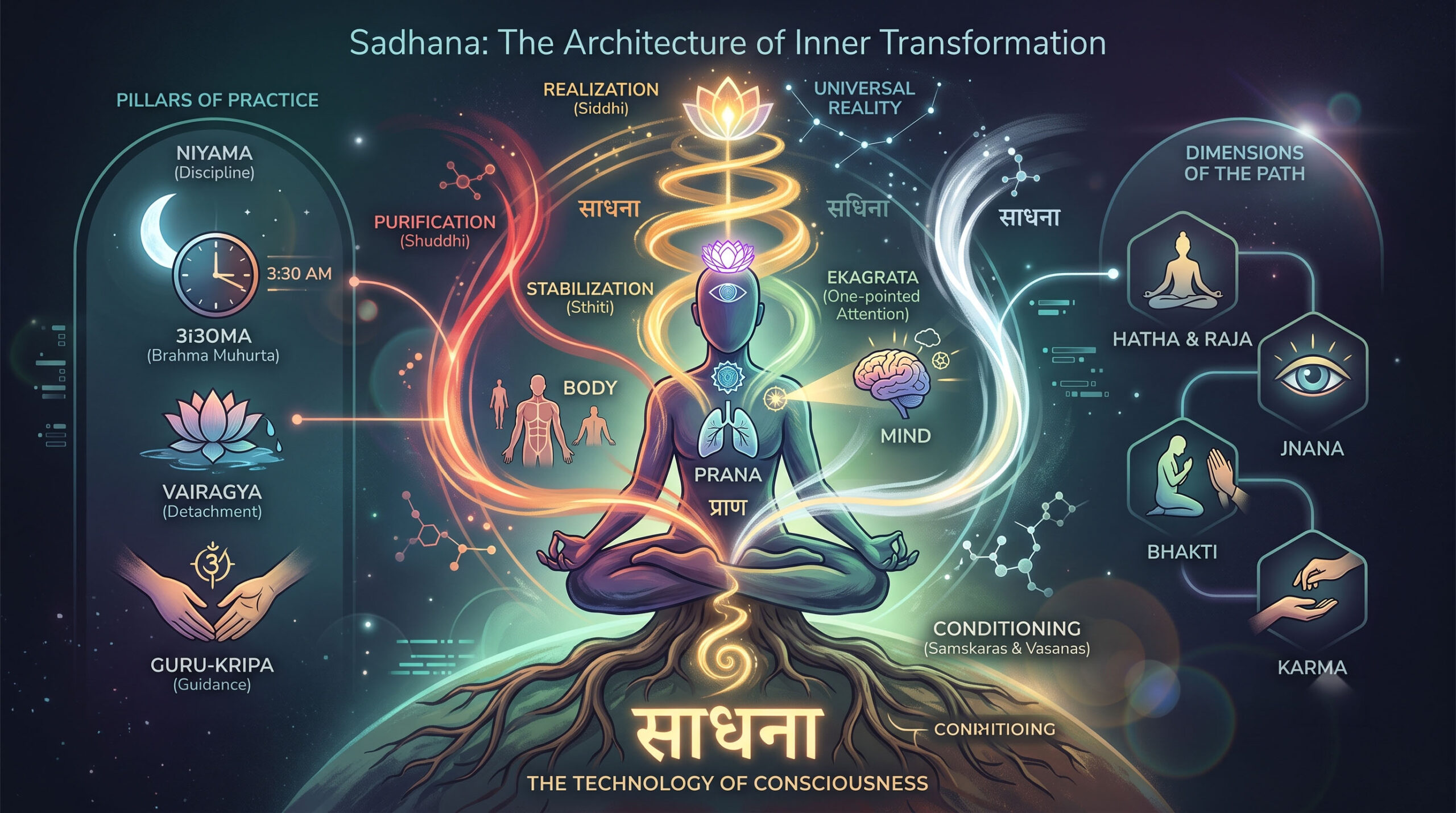
As Swami Amit Dev emphasizes in his public discourses and teachings, human suffering and modern stress do not originate from external circumstances, but from the uncontrolled entanglement of attention with fleeting mental states. When the mental lake is agitated by desire, fear, and distraction, the underlying Self cannot be perceived. When the ripples subside through systematic sādhana (practice), the Seer abides effortlessly in its true nature (Svarūpe’vasthānam).
2. The Twin Pillars: Abhyāsa and Vairāgya
Patanjali asserts that the stilling of mental fluctuations requires two inseparable wings:
- Abhyāsa (Continuous, Disciplined Practice): Practice is not occasional; it becomes firmly grounded when pursued for a long time, without interruption, and with reverent devotion (dīrgha-kāla-nairantarya-satkārāsevito dṛḍha-bhūmiḥ). In the Guru Parampara tradition, practice is viewed as daily duty, transforming routine into conscious worship.Swami Amit Dev
- Vairāgya (Dispassionate Awareness): Cultivating freedom from thirst for sensory and conditioned outcomes. It is not cynical withdrawal from society, but a detached, inner centeredness while actively fulfilling one\’s worldly responsibilities.
3. Ashtanga Yoga: The Integrated Path to Wholeness
Swami Amit Dev presents the eight limbs (Ashtanga) not as disjointed stages, but as an integrated lifestyle addressing the physical, ethical, energetic, and transcendental dimensions of life:
| Limb | Sanskrit Term | Practical Focus | Living Application |
|---|---|---|---|
| 1. Social Ethics | Yama | Ahimsa, Satya, Asteya, Brahmacharya, Aparigraha | Harmonizing external relationships through non-violence and integrity. |
| 2. Self-Purification | Niyama | Saucha, Santosha, Tapas, Svadhyaya, Ishvara Pranidhana | Cultivating inner purity, contentment, and humble surrender to the divine. |
| 3. Posture | Āsana | Sthira-sukham āsanam (steady and comfortable) | Preparing the nervous system and physical vessel to remain unperturbed. |
| 4. Breath Regulation | Prāṇāyāma | Expanding the life force (prāṇa) | Regulating subtle energy to steady cognitive functions. |
| 5. Sensory Inwardness | Pratyāhāra | Drawing attention away from external triggers | Gaining sovereignty over mental inputs in a high-stimulation world. |
| 6. Focused Attention | Dhāraṇā | Binding consciousness to a single point | Sharpening intent, concentration, and mental clarity. |
| 7. Meditative Flow | Dhyāna | Unbroken stream of awareness | Experiencing continuous silence and natural absorption. |
| 8. Self-Realization | Samādhi | Transcendental absorption | Complete unity of the practitioner, the process, and reality. |
4. The Path of Action: Kriyā Yoga in Everyday Life
For householders and professionals operating in modern environments, the opening sutra of the Sādhana Pāda provides a direct blueprint:
तपःस्वाध्यायेश्वरप्रणिधानानि क्रियायोगः
(Tapaḥ-svādhyāyeśvara-praṇidhānāni kriyā-yogaḥ)
- Tapas (Disciplined Austerity): Maintaining physical vitality and patience amid hardship.
- Svādhyāya (Self-Study & Contemplation): Observing one\’s reactions, tendencies, and studying authentic scriptural wisdom.
- Ishvara Pranidhana (Surrender to Divine Will): Acting skillfully without anxiety over the fruits of action, honoring the sacred lineage (Guru Kripa).Swami Amit Dev
Through Kriyā Yoga, the afflictions of the mind—ignorance (avidyā), egoism (asmitā), attachment (rāga), aversion (dveṣa), and existential fear (abhiniveśa)—are systematically attenuated.
5. Bridging Vedic Heritage and Modern Existence
The core message emphasized by Swami Amit Dev is that Patanjali’s Yoga Sutras are not an abstract, historical artifact meant only for forest-dwelling hermits. Rather, they are an essential science of resilience and consciousness for the contemporary individual. By aligning classical yogic discipline with daily life, one achieves not just physical health, but profound emotional stability, clear discernment, and liberation from inner distress.s




Leave a Reply