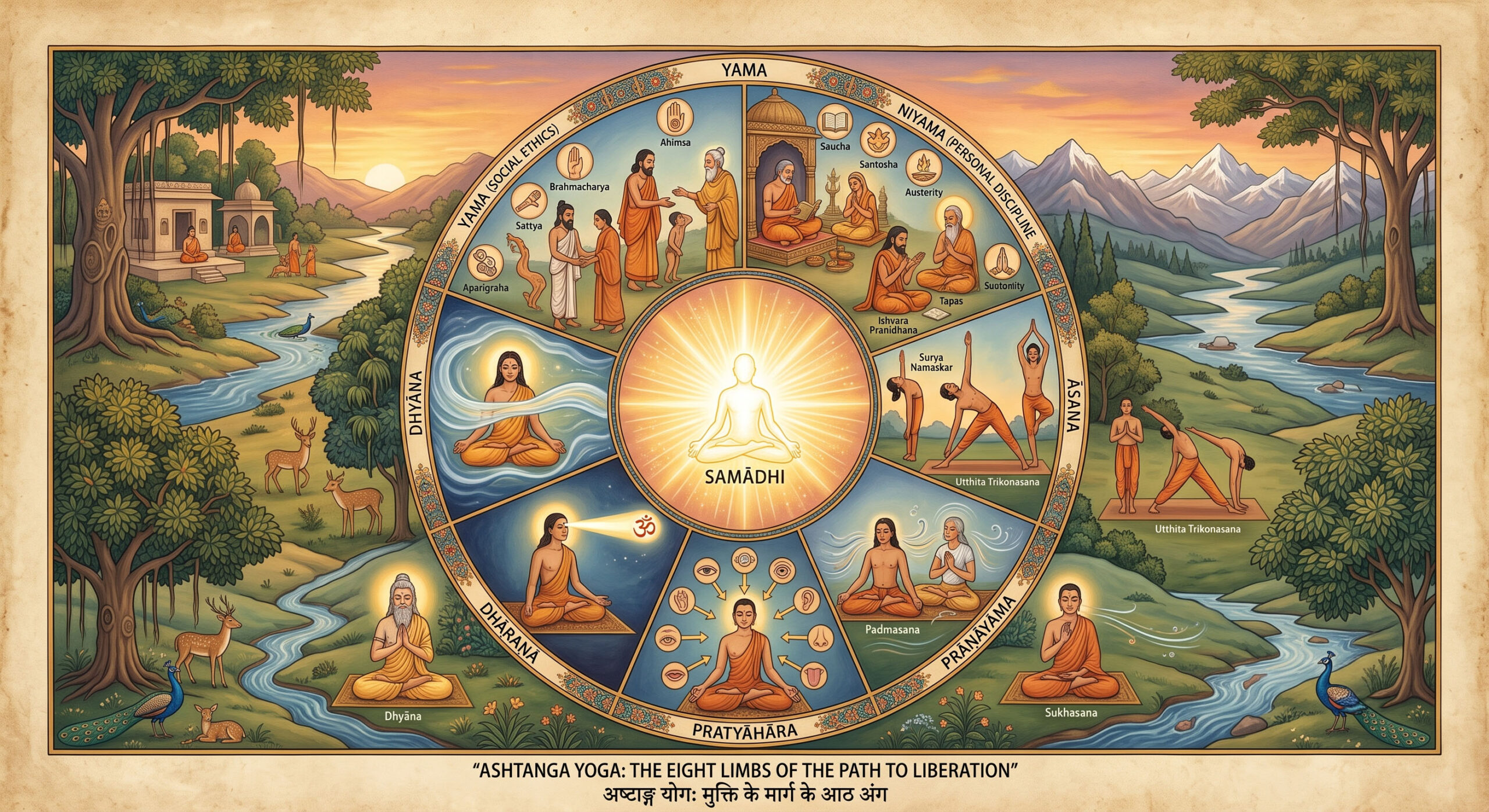
The Bridge Between Consciousness and Neural Architecture
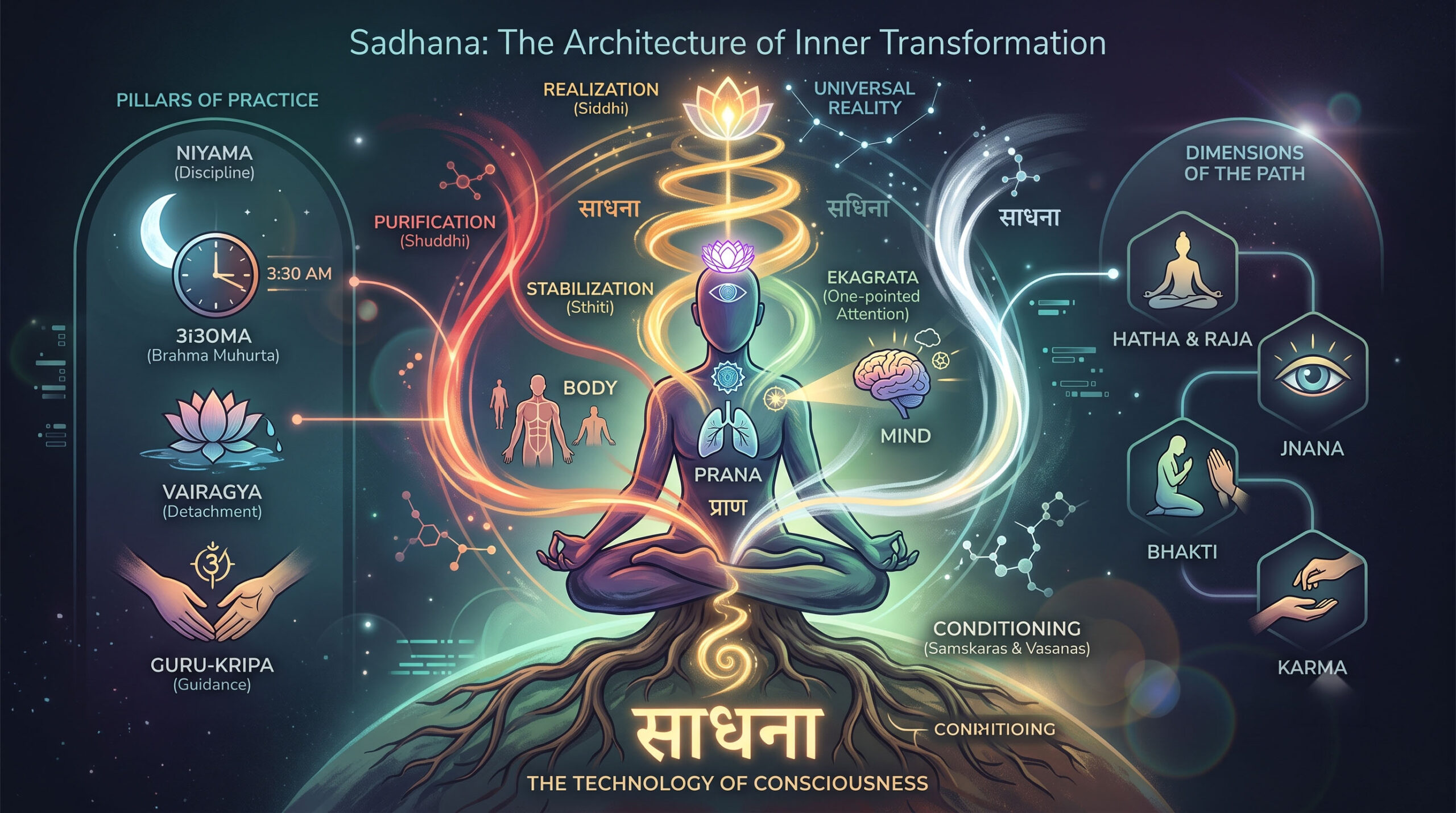
For millennia, the practitioners of Vedic Yog approached the human mind not as an abstract phantom, but as an experiential, dynamic instrument—an instrument governed by subtle energy channels (Nadis), mental modifications (Vrittis), and vital life force (Prana). In Patanjali’s classical definition, Yogash Chitta Vritti Nirodha—the cessation of the fluctuations of consciousness—lies the ultimate goal of mental mastery.
Today, modern neuroscience arrives at the very same threshold using fMRI scanners, electroencephalograms (EEG), and neurochemical assays. Where the ancient Rishis spoke of quieting the Chitta, modern cognitive scientists speak of down-regulating the Default Mode Network (DMN) and rewiring cortical architecture through neuroplasticity.
When Yog is stripped of modern superficiality and practiced in its authentic, therapeutic depth, it functions as a precise biological and neural technology.
1. Neuroplasticity: The Physical Manifestation of Samskaras
Neuroscience long operated under the assumption that the adult human brain was structurally fixed. That dogma has dissolved: the brain is neuroplastic, constantly remodeling synaptic strength and physical pathways in response to focused attention, repeated behavior, and mental states.
In Yogic philosophy, this mechanism has always been understood through the doctrine of Samskaras (subconscious grooves or behavioral imprints) and Vasanas (latent tendencies).
- When a mind is perpetually anchored in stress, anxiety, or reactivity, it reinforces chronic neural loops—most notably over-sensitizing the amygdala, the brain\’s threat-detection center.
- Through systematic Sadhana—integrating steady postures (Asana), disciplined breath (Pranayama), and withdrawal of sensory distraction (Pratyahara)—the practitioner consciously prunes maladaptive synaptic connections.
Neuroimaging demonstrates that consistent contemplative practice thickens the prefrontal cortex (responsible for executive function, emotional regulation, and decision-making) while increasing gray matter density in the hippocampus(associated with learning and emotional memory). Yog literally reconstructs the physical architecture of the brain.
2. Pranayama and the Autonomic Switchboard: Vagal Tone
The brain and body communicate through bidirectional neural highways, principal among which is the Vagus nerve(Cranial Nerve X). The vagus nerve controls parasympathetic tone—the biological brake on the sympathetic \”fight-or-flight\” cascade.
When practitioners engage in classical rhythmic breathing—such as Anulom Vilom (alternate nostril breathing), Ujjayi, or extended exhalation kriyas:
- Baroreceptor Stimulation: Slow, deep diaphragmatic respiration stimulates cardiopulmonary baroreceptors, signaling the brainstem (nucleus tractus solitarii) that the physical system is safe.
- Neurotransmitter Regulation: This shift immediately suppresses systemic cortisol and epinephrine while boosting inhibitory neurotransmitters, notably GABA (gamma-aminobutyric acid). Low GABA levels are directly implicated in clinical anxiety and panic disorders; Yogic breath control restores baseline inhibitory control, calming cortical hyperactivity.
- Heart Rate Variability (HRV): High vagal tone directly translates into elevated HRV, an objective physiological marker of emotional resilience, neurocardiac stability, and autonomic equilibrium.
3. Meditation and the Default Mode Network: Quieting the Ahamkara
One of the most profound intersections between neuroscience and Vedic Yog lies in the study of the Default Mode Network (DMN)—a constellation of brain regions (including the medial prefrontal cortex and posterior cingulate cortex) that fires when the brain is not engaged in an active, goal-directed task.
The DMN is the neural substrate of the narrative self—the ego-construct (Ahamkara). It is where rumination, regret over the past, anxiety about the future, and endless internal chatter take place.
When a practitioner moves into Dharana (unbroken concentration) and Dhyana (meditative absorption):
- DMN Attenuation: Functional imaging reveals an immediate down-regulation of DMN activity. The incessant narrative of the self quiets down.
- Brainwave Coherence: The brain transitions from high-frequency beta waves (associated with active stress and fractured attention) to synchronous alpha (8–12 Hz, relaxed alertness) and deep theta (4–8 Hz, subconscious integration and deep restorative rest) waves. In advanced Yogic states, synchronous gamma rhythms appear, indicating widespread neural coherence and heightened perceptual clarity.
4. The Endocrine–Subtle Energy Axis: Glands, Chakras, and Homeostasis
In the traditional Yogic paradigm, the subtle energy centers (Chakras) govern vitality along the spinal axis (Sushumna Nadi). Modern anatomical correlation reveals that the physical locations of the primary Chakras align with the body\’s major nerve plexuses and endocrine glands:
| Energy Center (Chakra) | Anatomical & Neuroendocrine Counterpart | Primary Physiological Function |
|---|---|---|
| Muladhara | Sacral/Coccygeal Plexus, Adrenals | Survival response, stress modulation |
| Svadhisthana | Hypogastric Plexus, Gonads | Reproduction, fluid balance, vitality |
| Manipura | Celiac (Solar) Plexus, Pancreas | Metabolic fire, glycemic control, gut-brain axis |
| Anahata | Cardiac Plexus, Thymus Gland | Immune competence, vagal innervation of heart |
| Vishuddha | Cervical Plexus, Thyroid / Parathyroid | Basal metabolic rate, calcium homeostasis |
| Ajna | Cavernous Plexus, Pituitary & Pineal Gland | Master neuroendocrine orchestration, circadian rhythm |
| Sahasrara | Cerebral Cortex, Higher Limbic System | Conscious awareness, integrated brain unity |
When Asanas compress, twist, and elongate the spine, they mechanical-chemically massage these glandular hubs and mobilize cerebrospinal fluid (CSF), promoting optimal neuro-endocrine feedback.
Moving Beyond Intellectual Knowledge to Lived Experience
Modern science has rendered an extraordinary service: it provides an empirical vocabulary for what the masters of Yog verified through direct inner observation centuries ago. It proves that serenity is not an accident of temperament, but a trainable neurobiological state.
Yet, intellectual analysis of the brain can only take us so far. Reading the chemical formula of water does not quench thirst; measuring synaptic firing does not confer peace of mind. Yog remains, first and foremost, a science of personal practice (Abhyasa) and detachment (Vairagya). When the breath is steady, the nervous system stabilizes; when the nervous system stabilizes, the mind dissolves its agitation—revealing the pure, untroubled consciousness that resides at our core.